Air Care Series: Calcium Channel Blocker Overdose
/Dr. Hassani navigates a perilous case of a Calcium Channel Blocker overdose. Review the pathophysiology of this highly morbid ingestion and the evidence behind the available treatments.
Read Moreemergency medicine tamed
Taming the SRU. The SRU is the "Shock Resuscitation Unit." It is a crucible of clinical training for the residents of the University of Cincinnati Emergency Medicine Residency training program.
Dr. Hassani navigates a perilous case of a Calcium Channel Blocker overdose. Review the pathophysiology of this highly morbid ingestion and the evidence behind the available treatments.
Read MoreCan high altitude pulmonary edema be predicted by an echocardiogram? Are there other reasons to worry about a PFO? Are climbers willing to swallow an ultrasound probe? Answers to these questions after the jump.
Read MoreDr. Koehler reviews cases and shared clinical pearls with this month’s Morbidity and Mortality Conference, Dr. Kowalenko visits virtually to discuss ABEM Board Certification and give us a medical history lesson on Presidential Assassinations
Read MoreTime is myocardium, and minimizing door-to-activation time improves outcomes in patients with acute coronary occlusion. There are a number of existing quality metrics used to help drive improvements in the time-based care of STEMI patients. Could a new quality metric help the decision making time of Emergency Physicians?
Read MoreThe paradigm of STEMI vs NSTEMI is one of the most well known in Emergency Medicine. Could a change in thinking shift this paradigm to OMI vs NOMI and result in a more complete identification of patients with significant morbidity and mortality?
Read MoreOne of the first tests ordered for a patient with ROSC following cardiac arrest is an EKG. Many of these EKGs are profoundly abnormal. Current practice is to evaluate for STEMI and to activate the cardiac cath lab if one is found. But, the test characteristics (sensitivity and specificity) of post-ROSC EKGs are likely different than the test characteristics for patients presenting to the ED with complaints of chest pain/symptoms concerning for ACS. This meta-analysis looked to pull together the existing literature and determine those test characteristics for this critically ill patient population. Read the summary after the link and listen to the podcast to hear a breakdown of this study.
Read MoreThis week’s Grand Rounds started off with a journal club on various aspects of emergent heart catheterization with Drs. Berger, Roblee and Thode. This was followed by some evidence by Dr. Sams on the evidence and feasibility of proning in the prehospital setting. Dr. Knight gave a case-based lesson in neuroimaging and finally Drs. Gleimer, Shaw and Hughes gave a sim on buproprion overdose and a guest lecturer on Human Trafficking.
Read MoreAcetaminophen is a tried and true pain-reliever and antipyretic, but Dr. Broadstock shows us that too much of a good thing really can be a bad thing, as demonstrated by this case of an acetaminophen overdose.
Read MoreWe had a fantastic Grand Rounds this week!! Dr. Li kicked us off with our monthly Morbidity and Mortality conference, covering cases ranging from methamphetamine intoxication to the evidence behind the medical pan scan. Dr. Harty then led us through several cases where ultrasound made critical diagnoses that completely altered patients’ clinical courses #SonoWavesFTW. Dr. Modi passionately educated us on the importance of an individual’s name, in both identity and cultural significance, and how crucial it is to respect and pronounce names correctly. Lastly. Drs. Berger, Irankunda, and Urbanowicz expertly discussed pediatric orthopedic injuries.
Read MoreExtra! Extra! We had excellent content this week in Grand Rounds. Dr. Paulsen started us off with discussing the difference in generational and gender-based communication approaches in our quarterly Leadership Curriculum. Drs. Frankenfeld and Ijaz then expertly discussed their new status epilepticus algorithm in QI/KT. Dr. Hill discussed his passion for diltiazem use in A.fib with RVR in his attending case follow up. Dr. Martella educated us on the evidence behind the most common medications given for renal colic in the ED during his R1 Clinical Treatment. Lastly, Drs. Broadstock and Lang battled it out in CPC involving a case of thyroid storm.
Read MoreRenal colic is a common presenting symptom in the ED, with an estimated prevalence as high as 10-15% in the US. (1) It accounts for approximately 1% of all ED visits per year. (27) Most patients will pass these calculi spontaneously and do not require surgical intervention, therefore focus on pain relief is of utmost importance in the emergency department. (1) NSAIDs have shown to be as effective, if not more effective than opioids, making them a reliable first line agent. (4,5) Opioids still provide a viable option in those with kidney disease or gastric ulcer disease, however they may be best utilized as combination agents to decrease the need for rescue analgesia. There is weak evidence to support the use of IV acetaminophen, with high cost burden, limiting its utility. Additional agents such as ketamine, lidocaine and magnesium carry with them limited evidence and inconsistencies in the literature, limiting their use, with further studies required. Alpha blockers seem to provide a shorter duration to expulsion, fewer pain episodes, and less hospital admissions with surgical intervention, specifically with larger stones (>5mm).
Read MoreThis week’s Grand Rounds was jam-packed with great morsels for all! Dr. Finney kicked us off with a discussion on orbital infections, Dr. Frederick discussed the nuances of dynamic EKG changes in the ED and consultation etiquette in her R3 Taming the SRU lecture, Dr. Iparraguirre discussed pearls of wisdom for his R4 Capstone, Dr. Kein expertly discussed the literature behind the most commonly used medications for agitation in the ED, Drs. Mullen and Ham battled head-to-head in a CPC case highlighting ethylene glycol toxicity, Dr. LaFollette presented a rare case of metformin-associated lactic acidosis, and lastly Dr. Runkle wrapped the day up with pearls for rural PEM.
Read MoreAgitation? Second nature to most Emergency Physicians but an art as much of a science. The science lays the backbone of this art, however and that’s where Dr. Courtney Kein comes in. Click and join us on a dive into the literature of sedation of the agitated patient.
Read MoreThis week in Grand Rounds we discussed the management of early pregnancy loss with OBGYN, things you don’t know you don’t know when you graduate with Dr. Paulsen, a case of tumor lysis syndrome with Dr. Laurence, an R4 case follow up with Dr. Hall, and our quarterly simulation with a myxedema coma case.
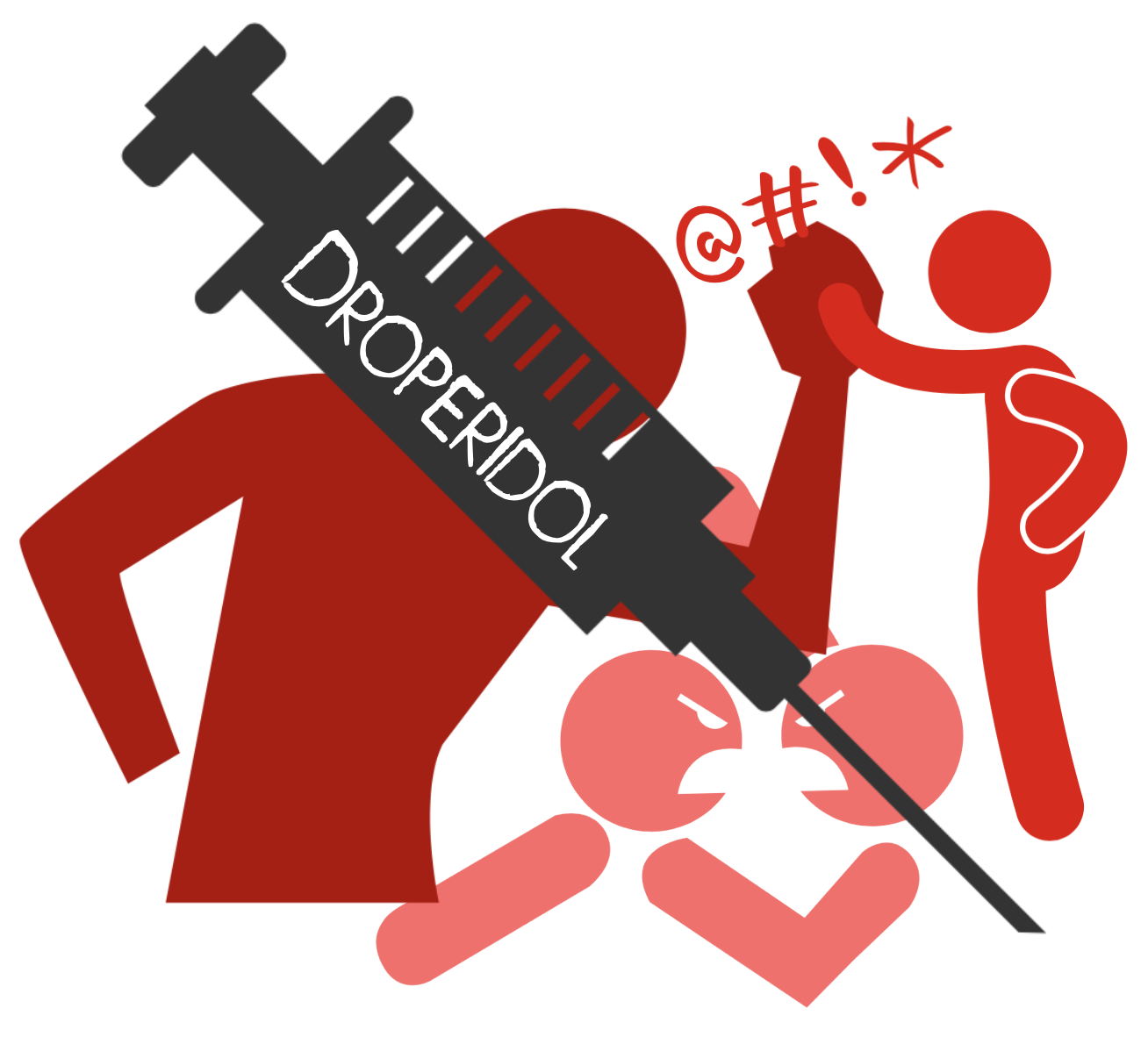
Read MoreDroperidol is a versatile medication with a number of potential uses for patients in the Emergency Department. It is also a medication surrounded in some degree of mystique because of the decision by the FDA in 2001 to issue a black box warning for its use in response to reports of QT prolongation and torsades de pointes. Many at the time (and since) have argued that, despite these case reports, droperidol is a safe and effective medication that can be used for the treatment of agitation, nausea and vomiting, and migraine. We have previously covered much of this background in a previous blog post. In our most recent journal club, we discussed 3 articles that looked at the safety and efficacy of droperidol for treating acutely agitated patients. Take a read and listen below for an in depth look at each of these papers.
Read MoreSRU (pronounced "shrew") = Shock Resuscitation Unit
Training in, and managing, the SRU is one of the crown jewels of our residency. It is where the sickest of the sick patients are found in our ED. It is a crucible, a test of knowledge and strength, and a true manifestation of the tripartite mission of our department: Leadership, Excellence, and Opportunity.
Check out AI contexted information from this and other great FOAMed sites via FOAMCortex